
Platform heels have been used for decades to add height while changing the pitch and proportions of a traditional high heel. From chunky sandals and Mary Janes to loafers, mules, and clogs, the platform can appear on almost any shoe silhouette.
Unlike a conventional heel of the same overall height, a platform raises both the front of the foot and the heel. That can reduce the effective heel pitch, although comfort still depends on the shoe’s construction, fit, heel shape, and platform height. Our guide to different types of platform shoes explains how the major silhouettes compare.
👠 Jump to a Platform Shoe Guide:
Platform shoes have moved in and out of mainstream fashion for generations, with particularly visible periods during the 1970s, 1990s, and early 2000s. Below, we look at how platform heels work, how to style them, and 17 examples that show the range of the silhouette, from understated block heels to dramatic designer platforms. For more background, explore our history of platform shoes and their recurring place in fashion.
What Are Platform Heels? How the Raised Sole Changes Height and Pitch
Platform heels have a raised sole beneath the forefoot in addition to an elevated heel. Platforms can be paired with block heels, wedges, stilettos, or other heel shapes, and the front platform height varies considerably between designs.
Because the platform raises the forefoot, a shoe can have a high overall heel measurement without creating the same heel-to-toe drop as a conventional heel of equal height. That can make some platforms feel less steep underfoot, but it does not automatically make them comfortable: fit, stability, cushioning, weight, and heel construction still matter.
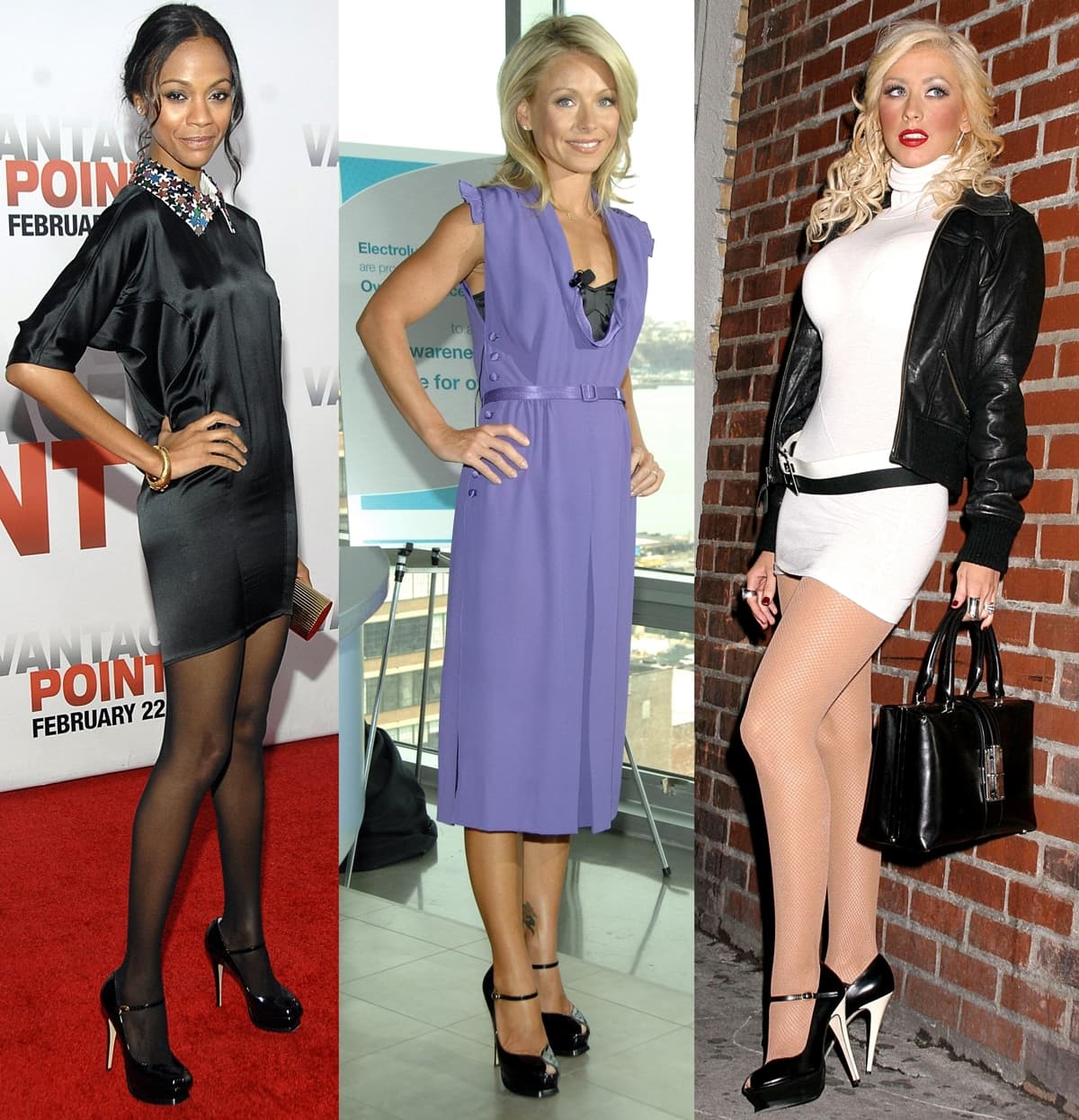 Zoe Saldaña, Kelly Ripa, and Christina Aguilera demonstrate three ways to wear Saint Laurent’s black Tribute platform sandals (Credit: Everett Collection / Shutterstock)
Modern platform shoes are strongly associated with the late 1960s and 1970s, when elevated soles became part of glam-rock and disco dressing. Performers including David Bowie and members of ABBA helped make the exaggerated silhouette especially visible.
Platforms returned prominently during the 1990s, appearing in runway collections by designers such as Vivienne Westwood and becoming closely associated with the Spice Girls. In luxury footwear, Saint Laurent’s Tribute sandal became another recognizable interpretation of the platform, combining a raised forefoot with interwoven straps and a high heel.
Part of its enduring appeal is its versatility. Platforms have appeared beneath sandals, pumps, sneakers, loafers, boots, and clogs rather than remaining tied to one specific shoe shape. Our guide to the major types of women’s shoes provides a broader look at how these footwear silhouettes differ.
How to Style Platform Heels: Proportion, Hemlines, and Outfit Balance
The easiest way to style platform heels is to start with the underlying shoe silhouette. A platform loafer works much like a conventional loafer, while platform sandals, Mary Janes, ankle boots, and mules can generally be paired with the same clothes as their lower-soled counterparts.
Proportion becomes more noticeable as the platform gets thicker. Chunky platforms can balance wide-leg trousers, flared jeans, maxi dresses, and shorter hemlines, while slimmer platform sandals can work with more streamlined evening looks.
If the shoes already have a strong color, metallic finish, embellishment, or exaggerated heel, keep the rest of the outfit relatively simple so their shape remains the focal point. Neutral platforms are easier to treat as part of the overall outfit rather than as a statement piece.
Most importantly, consider how the shoe fits and feels when walking. A platform changes the pitch of a heel, but a tall or rigid platform can also affect stability and how easily the foot flexes. For longer wear, heel shape, ankle support, cushioning, and fit matter as much as the platform height.
17 Platform Heel Styles: From Sandals and Pumps to Loafers and Clogs
The examples below show how designers interpret the platform silhouette differently, including braided sandals, Mary Jane pumps, chunky mules, loafers, clogs, and crystal-covered evening shoes. Some styles may no longer be in current production, but their construction and proportions remain useful references when comparing platform shoes.
1. RAYE Camilla: Braided Platform Sandals
The RAYE Camilla takes a relatively straightforward block-heel sandal and adds a one-inch platform beneath the forefoot. Braided detailing adds texture to the cognac-colored design without overwhelming its simple ankle-strap construction.
The platform offsets part of the four-inch block heel, while the ankle strap provides a more secure fit than a slip-on sandal. The neutral color and woven details make this platform work with maxi dresses, wide-leg trousers, or other warm-weather pieces.
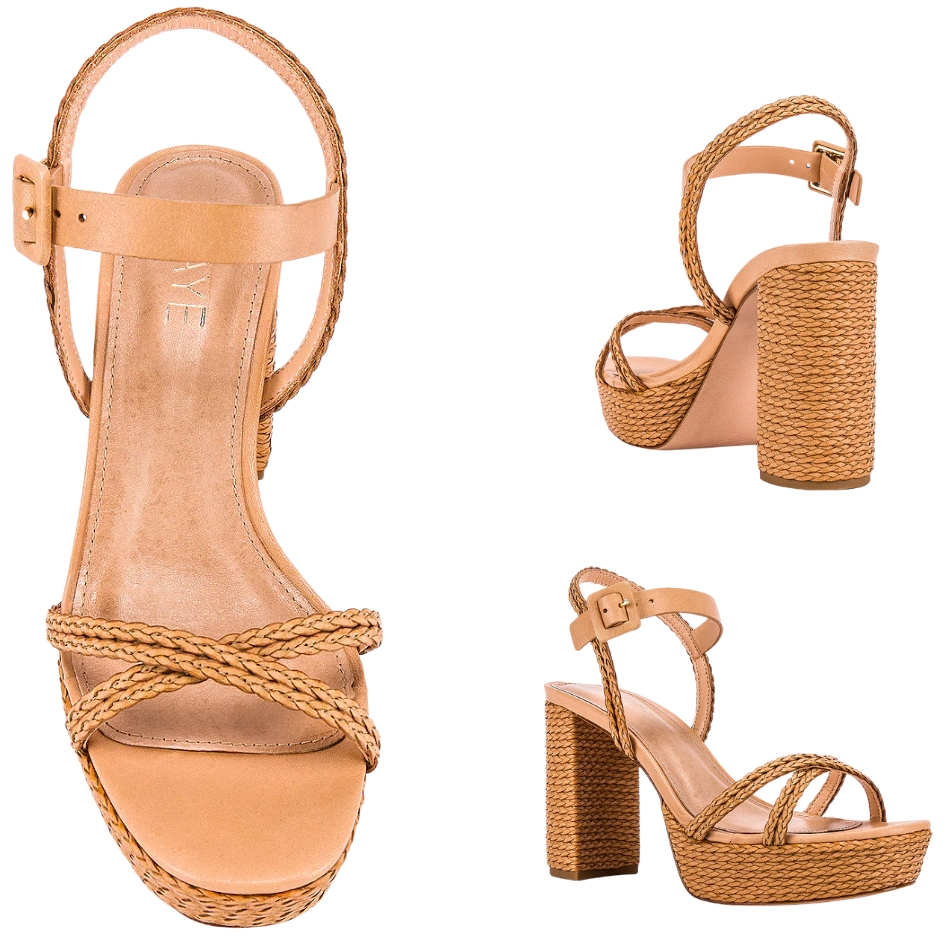 The RAYE Camilla combines braided cognac straps with a platform sole and chunky block heel
2. Sam Edelman Jildie: Patent Platform Slingback Pumps
The Jildie shows how a platform can be incorporated into a more traditional pump silhouette. The slingback comes from Sam Edelman, the American footwear label known for styles ranging from pumps and sandals to loafers and boots.
The patent-finish design combines a rounded closed toe, platform sole, substantial heel, and slingback strap with an adjustable buckle. The result sits between a classic pump and the chunkier platform proportions of the 1970s.
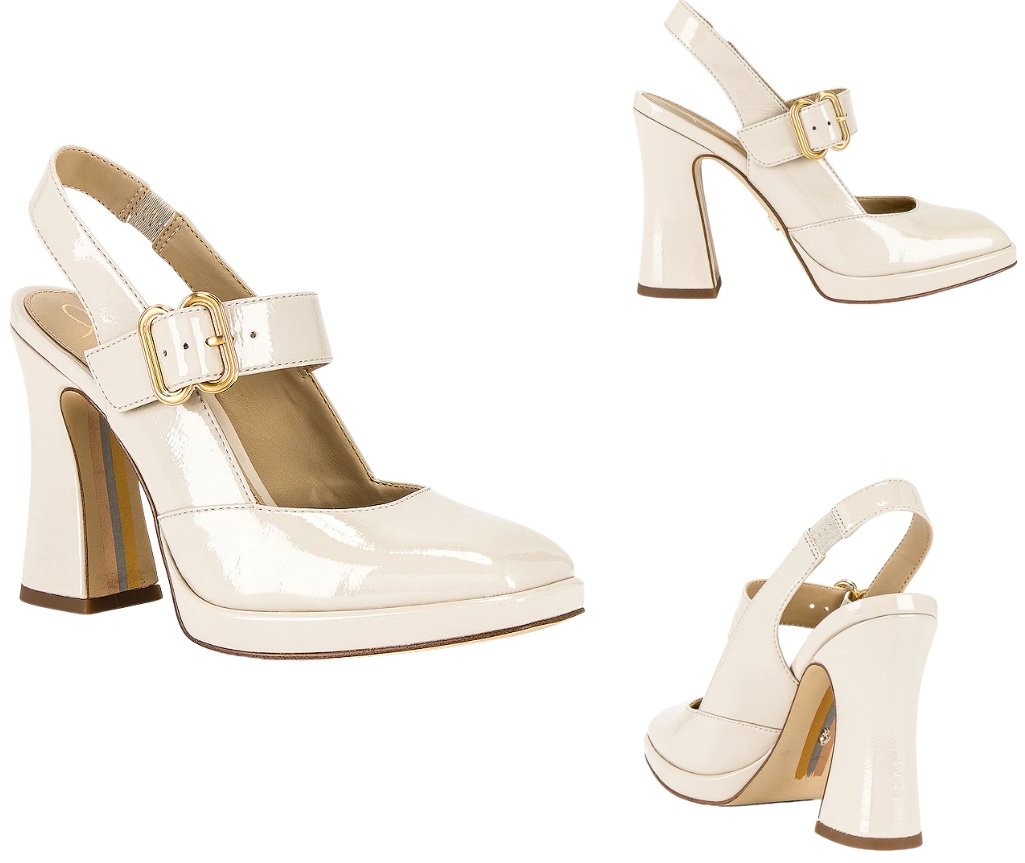 Sam Edelman’s Jildie platform pump features an ivory patent finish, slingback strap, and chunky heel
3. Schutz Lunah: Metallic Platform Sandals
The Schutz Lunah demonstrates how a platform can amplify an already decorative evening sandal. Its metallic fuchsia-purple finish is paired with braided toe straps, a chunky heel, and slender ties that wrap around the ankle.
Small moon and star charms hang from the ankle ties, adding another decorative detail to a shoe that is deliberately more statement-making than neutral. The substantial heel and forefoot platform give the sandal its characteristic retro proportions.
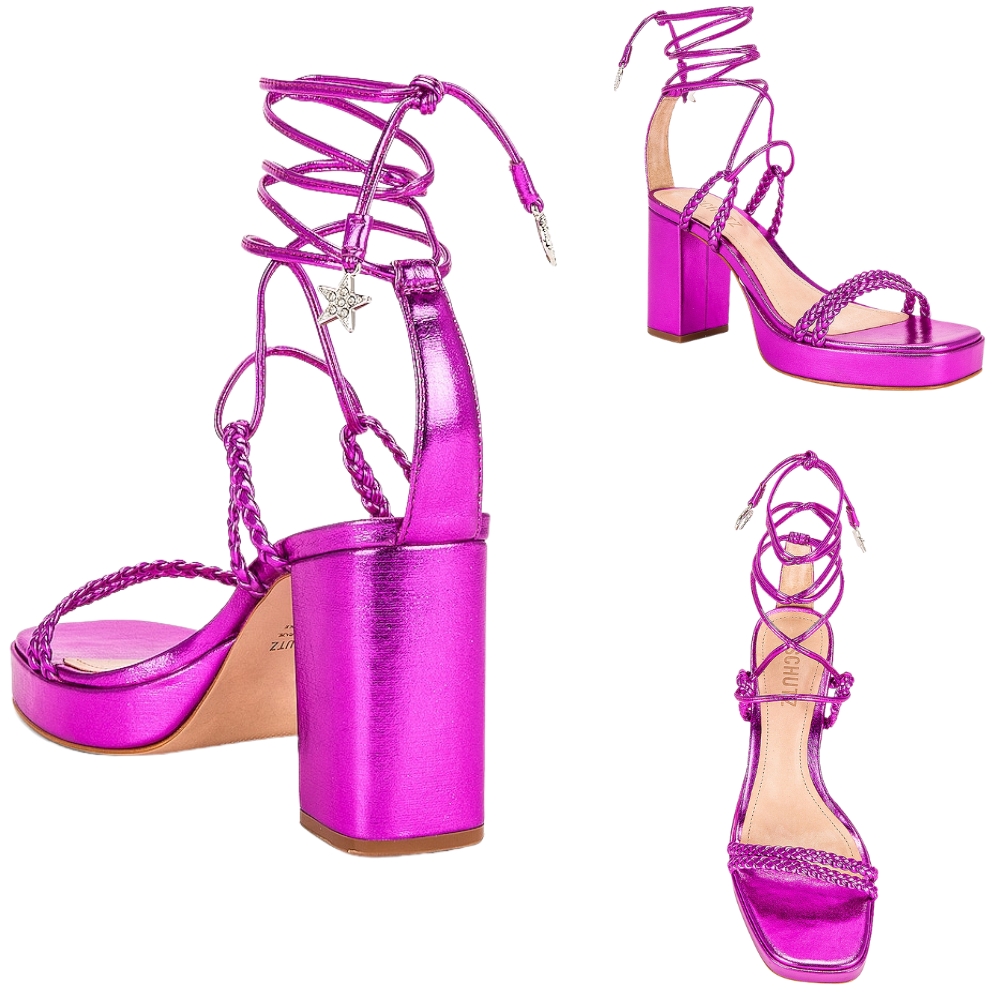 Metallic fuchsia gives the Schutz Lunah platform sandals a high-impact finish, complemented by braided straps and ankle ties
4. Jeffrey Campbell Hollywood Mule: Crystal-Covered Platforms
Jeffrey Campbell has long experimented with exaggerated soles and unconventional heel shapes, making the Hollywood mule a natural fit for the Los Angeles footwear label. Our Jeffrey Campbell brand guide looks at the independent company’s history and its distinctive approach to footwear.
The Hollywood combines the ease of a slip-on mule with a platform sole and sharply flared heel. Its lavender satin upper is covered with crystals, while the angled square toe reinforces the retro-inspired shape.
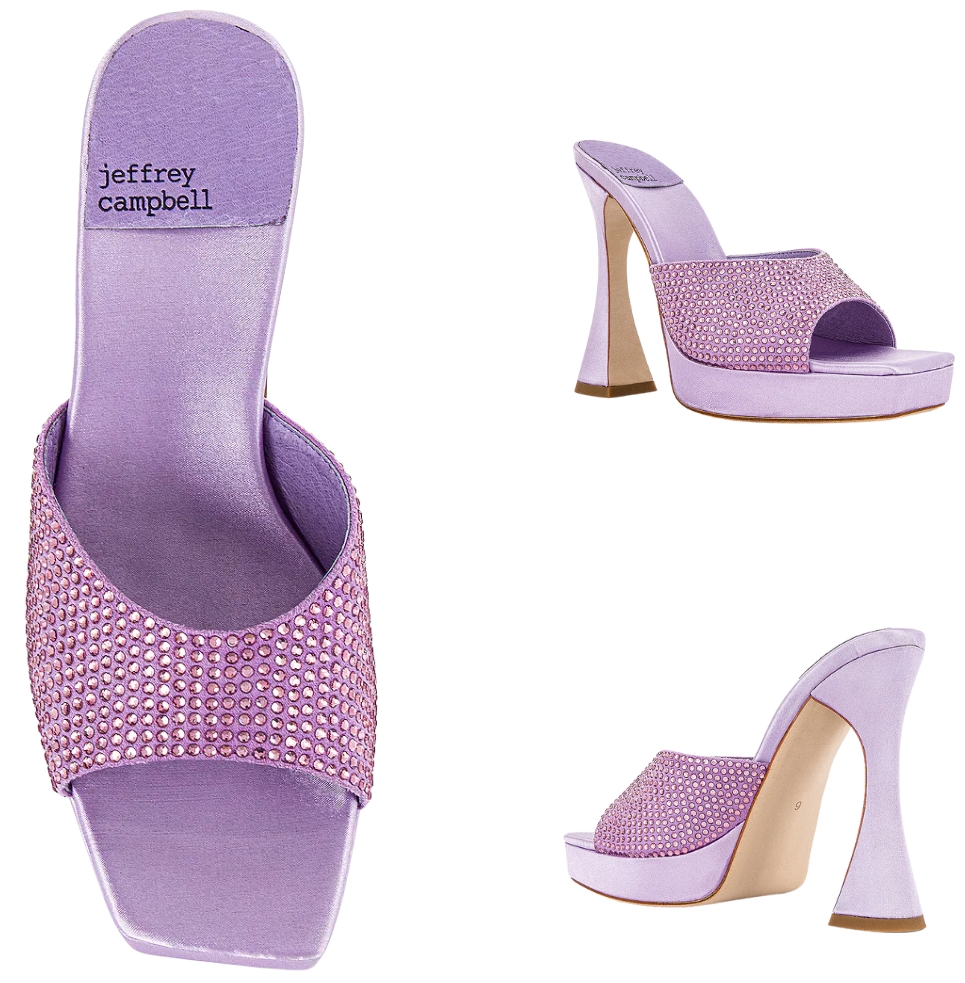 Jeffrey Campbell’s lavender Hollywood mule pairs a crystal-covered upper with a square toe, platform sole, and flared heel
With such a decorative upper and substantial silhouette, this type of platform works best when the shoe provides most of the texture in an outfit. Wide-leg jeans can temper the sparkle, while a short evening hemline leaves the unusual heel shape visible.
5. RAYE Leona: Croc-Embossed Platform Loafers
The RAYE Leona approaches the platform from a loafer rather than sandal or pump silhouette. Its blush pink croc-embossed upper is finished with a chunky gold-tone chain across the vamp.
The thick forefoot platform and tall block heel transform the proportions of the familiar loafer shape. It is a useful example of how platforms can move beyond conventional evening footwear while retaining recognizable details from another shoe category.
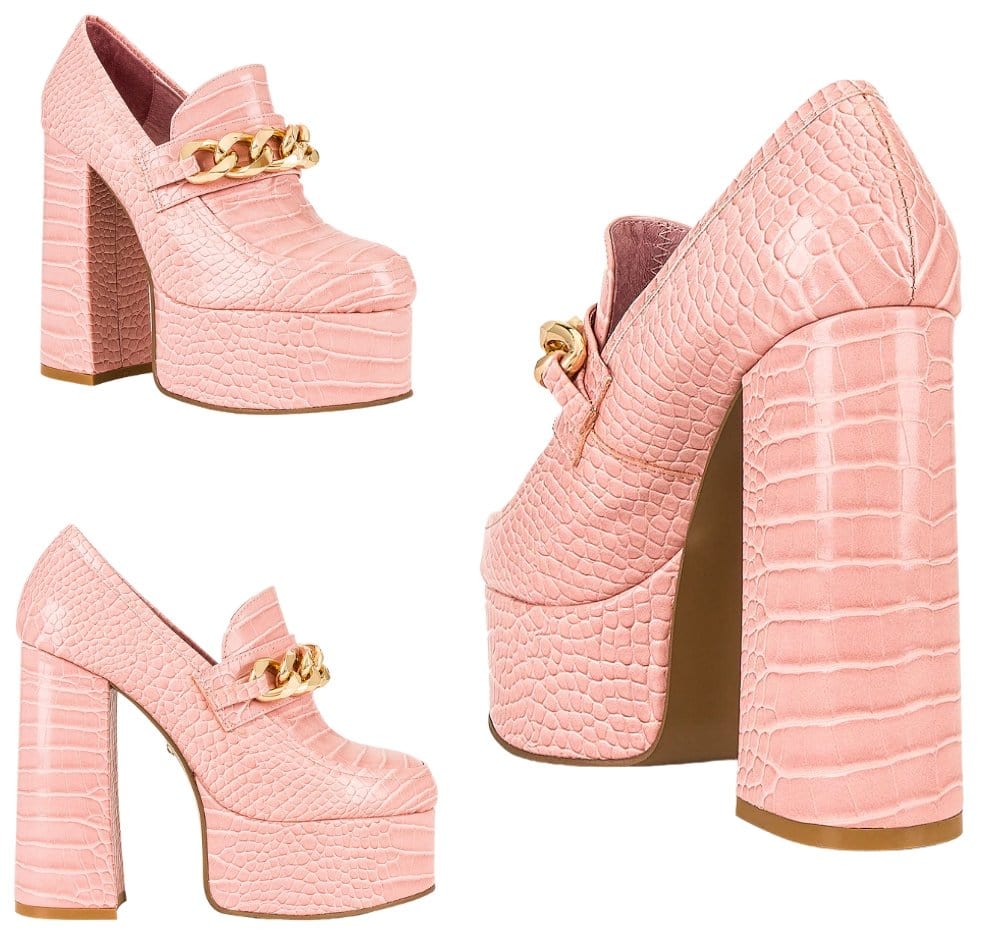 The RAYE Leona reworks the loafer as a blush pink croc-embossed platform heel with gold chain hardware
6. Saint Laurent Bianca: Knotted Leather Platform Sandals
Saint Laurent’s Bianca demonstrates a different side of the platform sandal. Instead of the Tribute’s interwoven T-strap construction, the Bianca uses knotted leather across the toe with a simpler ankle strap and substantial covered block heel.
The raised forefoot visually balances the heel height and changes its effective pitch. The black leather version also shows how a dramatic platform can stay relatively understated when the color and upper stay simple.
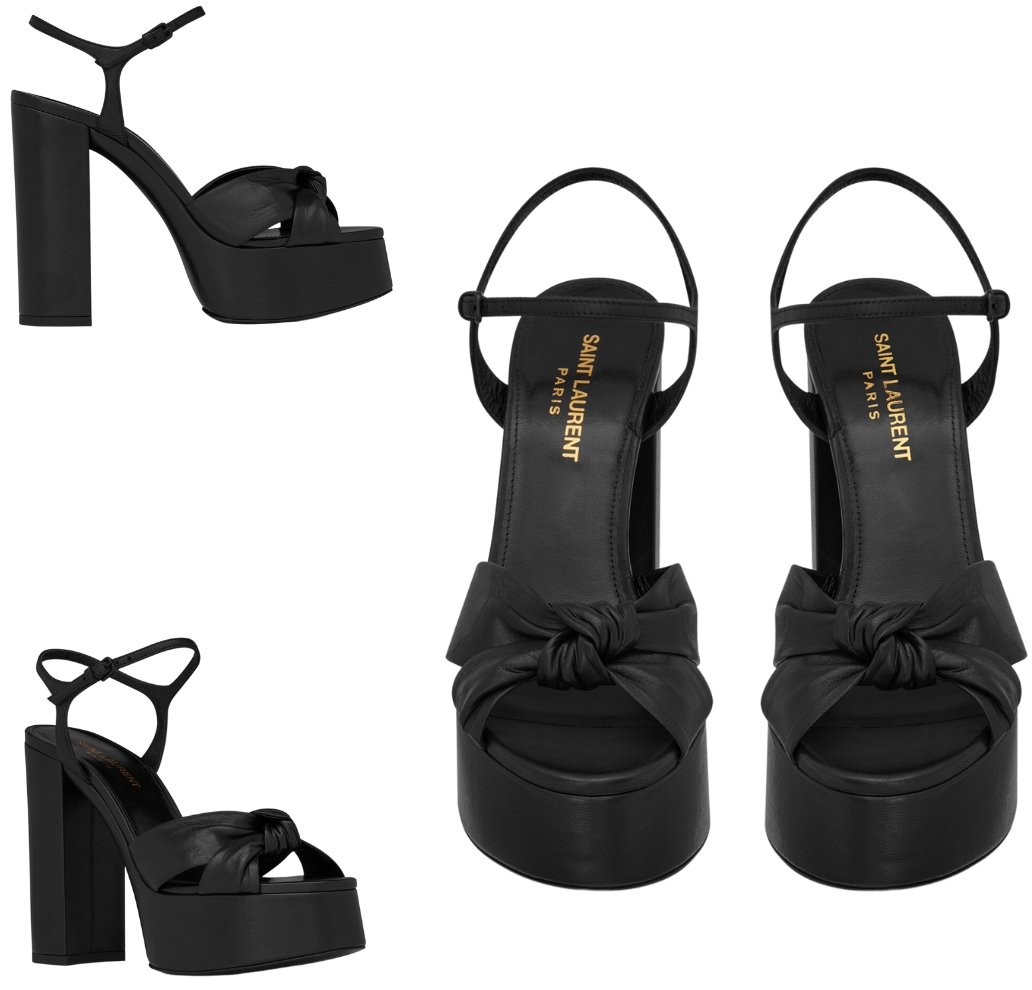 Saint Laurent’s Bianca platform sandals feature knotted leather straps, an ankle strap, and a substantial block heel
7. Black Suede Studio Kristen: Spiral-Wrap Platform Sandals
The Kristen by Black Suede Studio combines the openness of a strappy sandal with a high platform and stiletto heel. Its most distinctive feature is the long structured strap that spirals upward around the ankle and lower leg.
That wraparound construction makes the shoe visually busier than a conventional minimalist sandal, so it works naturally with shorter hemlines or streamlined clothing that leaves the ankle detail visible.
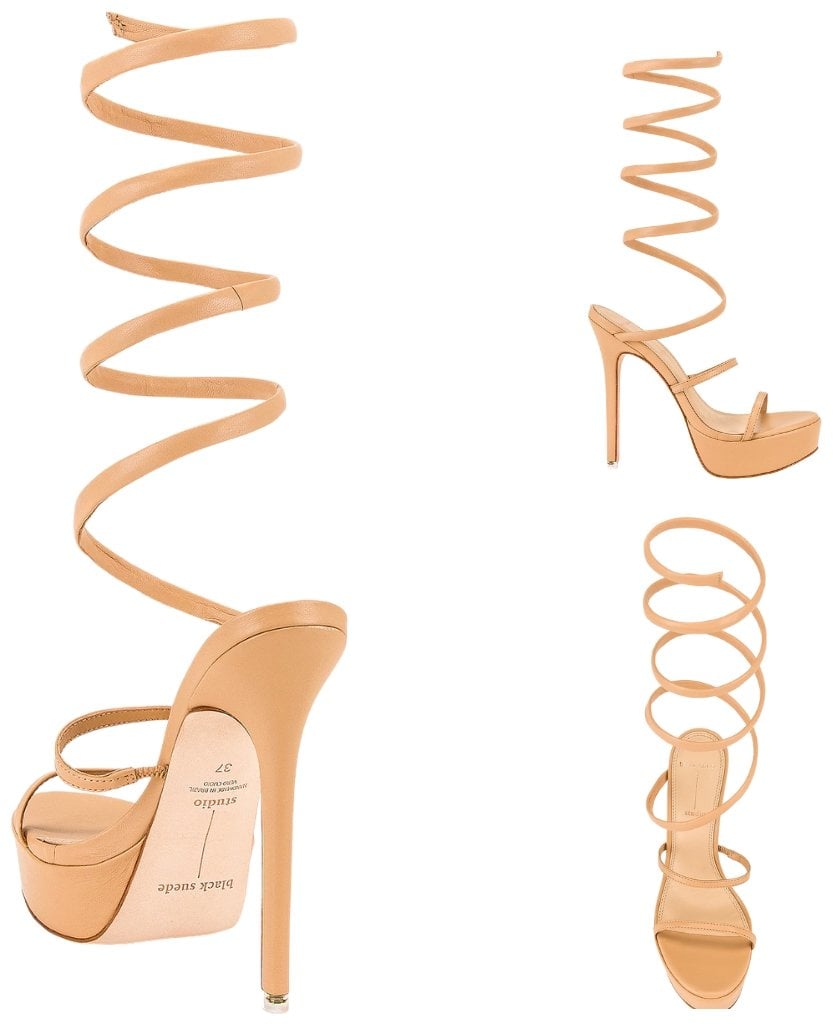 The Black Suede Studio Kristen sandal combines a slim platform and stiletto heel with a sculptural spiral ankle wrap
8. Simon Miller Bubble: Platform Clogs
Platforms don’t require conventional high-heel construction. Clogs and other slip-on shoes can use a thick sole to create height while maintaining a very different foot position from a stiletto or block-heel sandal.
Simon Miller’s Bubble clog takes that idea in a sculptural direction, pairing a smooth black upper with a thick, rounded platform. Its minimal detailing keeps attention on the sole’s exaggerated shape.
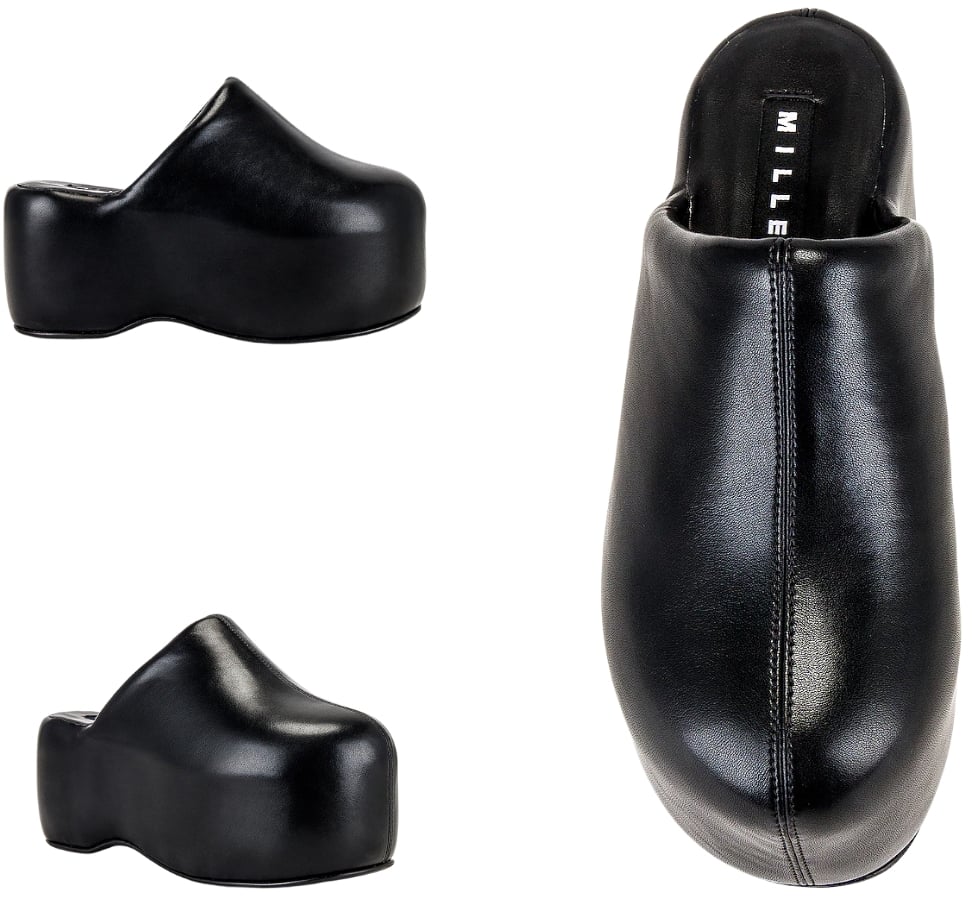 Simon Miller’s black Bubble clog uses a rounded upper and thick platform sole for an exaggerated slip-on silhouette
9. Larroudé Dolly: Crystal Platform Sandals
Larroudé’s Dolly pushes the platform sandal firmly into evening territory. Crystals cover the silver upper, ankle strap, platform, and chunky heel, turning the entire shoe rather than a single detail into the decorative element.
The open toe and ankle strap keep the upper relatively simple beneath the embellishment. A broad heel and substantial forefoot platform give the shoe a noticeably different profile from a crystal-covered stiletto sandal.
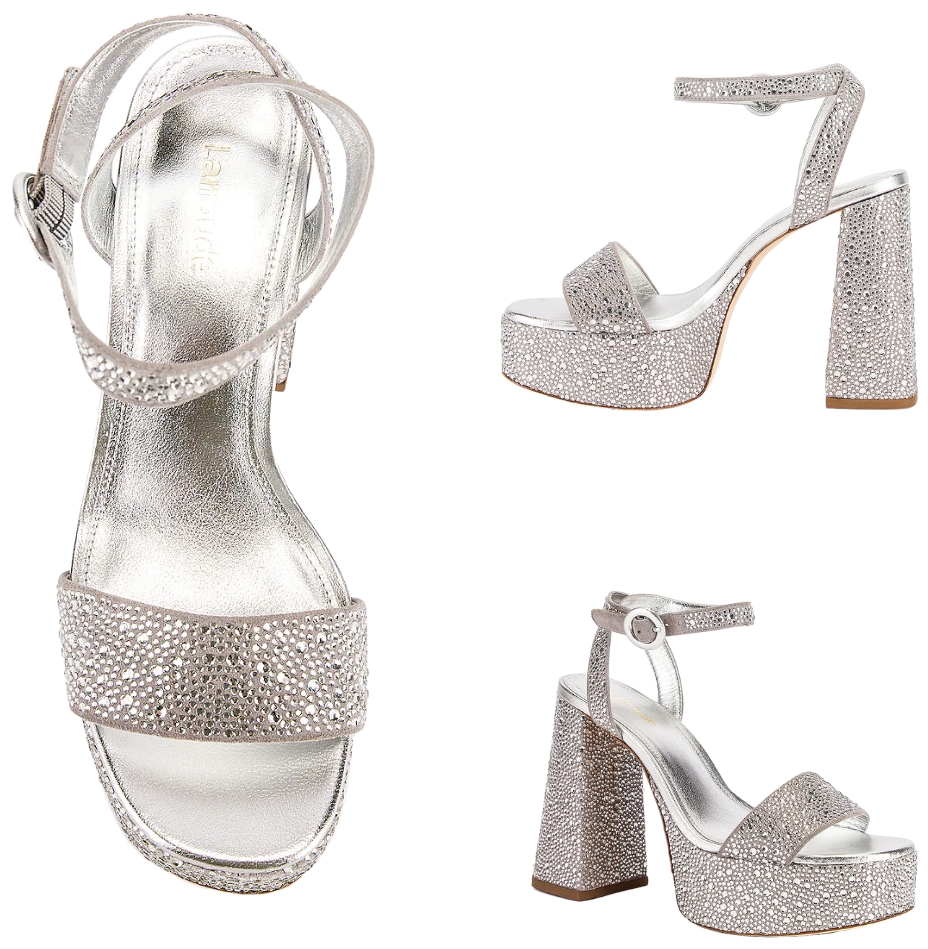 Larroudé’s silver Dolly platform sandal is covered in crystals from the toe strap to the chunky heel
10. Si Rossi: White Leather and Cork Platform Mules
The Si Rossi mule uses contrasting materials to emphasize its construction. A clean white leather upper sits above a thick cork platform that continues into a curved, architectural heel.
The square toe and substantial sole give the shoe a distinctly retro profile, while the cork introduces a lighter-looking texture than a fully leather-covered platform.
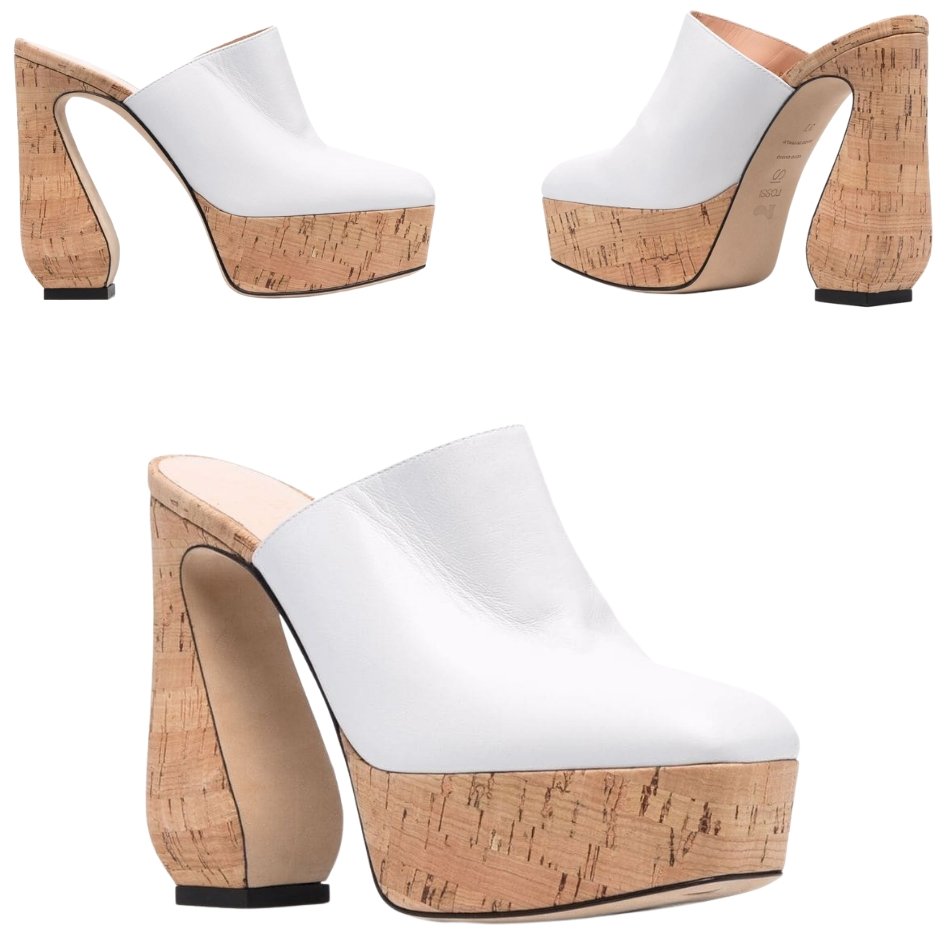 Si Rossi pairs a white leather mule upper with a thick cork platform and curved architectural heel
11. Versace: Pink High-Heel Platform Mules
Versace’s pink mule demonstrates how dramatically a platform can alter an otherwise simple open-toe slip-on. The upper is relatively restrained, while the exaggerated sole and tall block heel provide most of the visual impact.
The layered construction creates the appearance of an especially deep platform beneath the forefoot. A monochromatic pink finish keeps the upper, sole, and heel visually connected despite their oversized proportions.
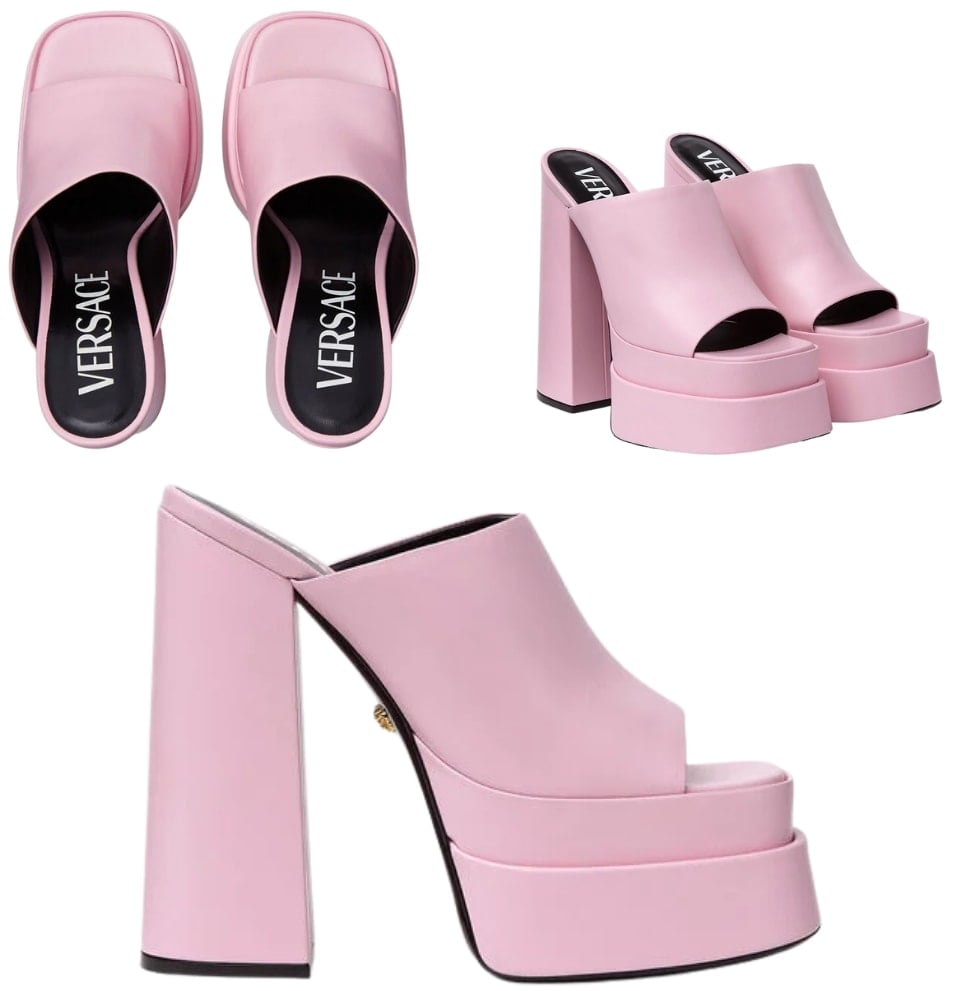 Versace’s pink platform mule exaggerates the classic slip-on shape with a layered sole and towering block heel
12. Casadei: Patent Mary Jane Platform Pumps
The Mary Jane is defined by a strap crossing the instep, a familiar detail that takes on very different proportions when combined with a substantial platform and high block heel.
Casadei’s light blue patent version pairs that traditional strap with a rounded toe and dramatically raised sole. The glossy finish emphasizes the sculptural construction and gives the otherwise retro silhouette a cleaner appearance.
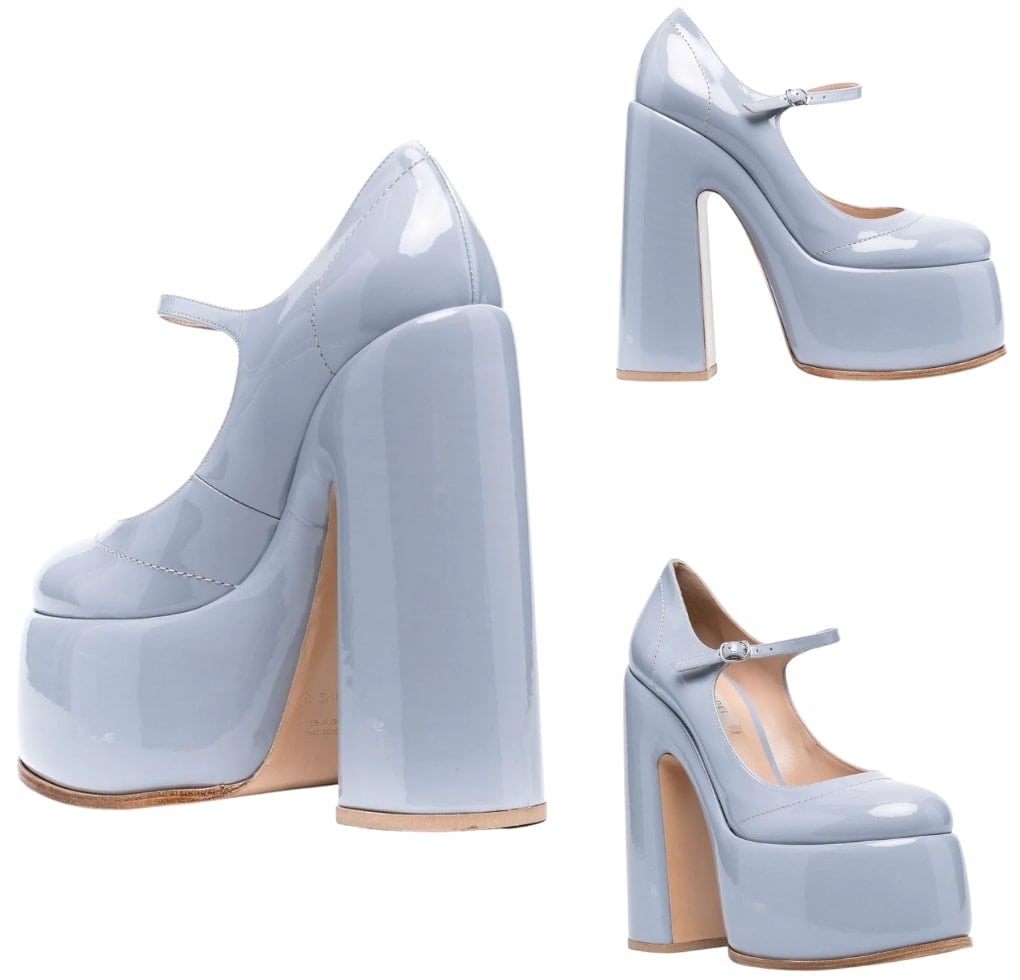 Casadei’s light blue patent Mary Jane pumps feature a substantial platform, rounded toe, and high block heel
13. The Saddler: Croc-Embossed Open-Toe Platforms
The Saddler’s brown leather mules combine several retro footwear details: an open square toe, croc-embossed texture, substantial platform, and flared high heel.
Because the brown upper, platform, and heel share the same embossed finish, the construction reads as a single sculptural shape. The warm neutral color also makes the pronounced platform easier to incorporate into an otherwise simple outfit.
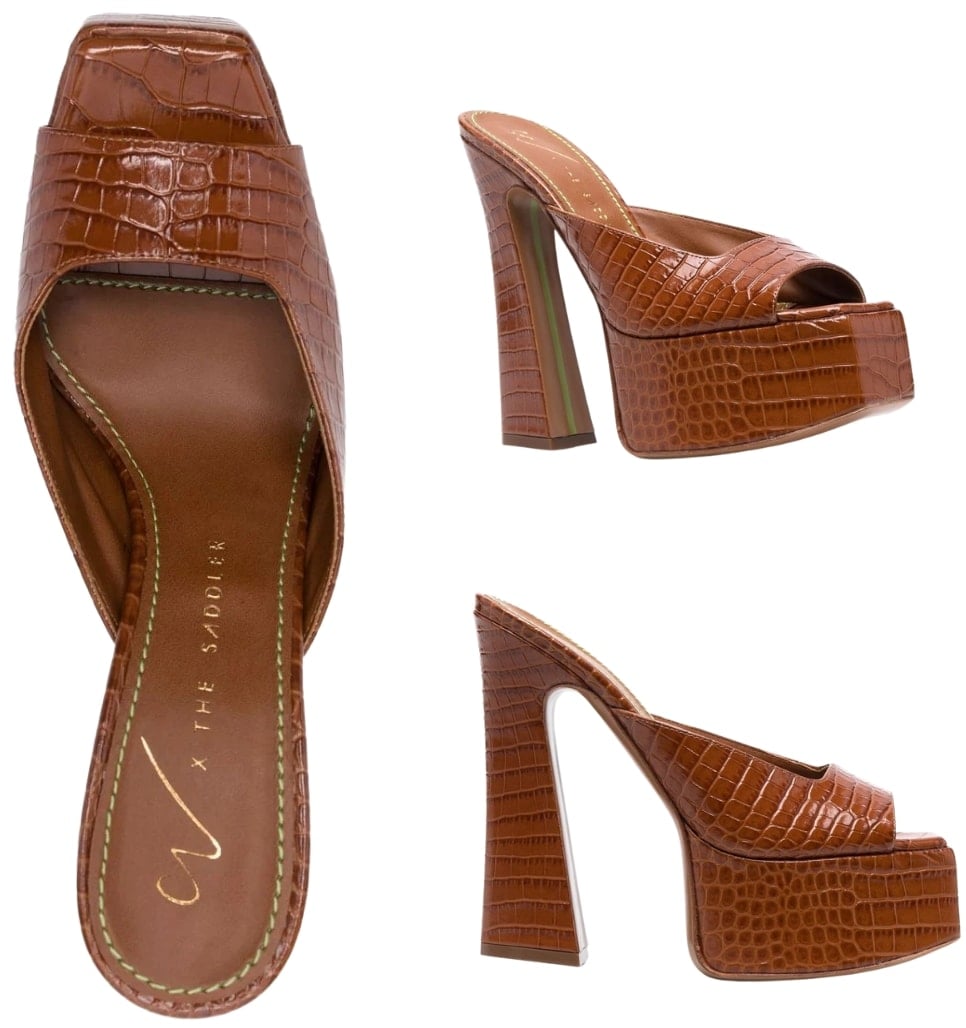 The Saddler’s brown leather mules combine a croc-embossed finish with an open toe, platform sole, and flared heel
14. Maje: Chunky Platform Loafers
Platform loafers offer a different approach to added height, pairing the familiar slip-on upper with a thicker sole instead of a conventional high heel. Our guide to loafer styles and brands explores classic horsebit and penny loafers alongside chunkier modern interpretations.
Maje’s black leather version uses a deep lug sole, rounded toe, and silver hardware across the vamp. The result preserves the basic loafer shape while giving it a heavier, more utilitarian base.
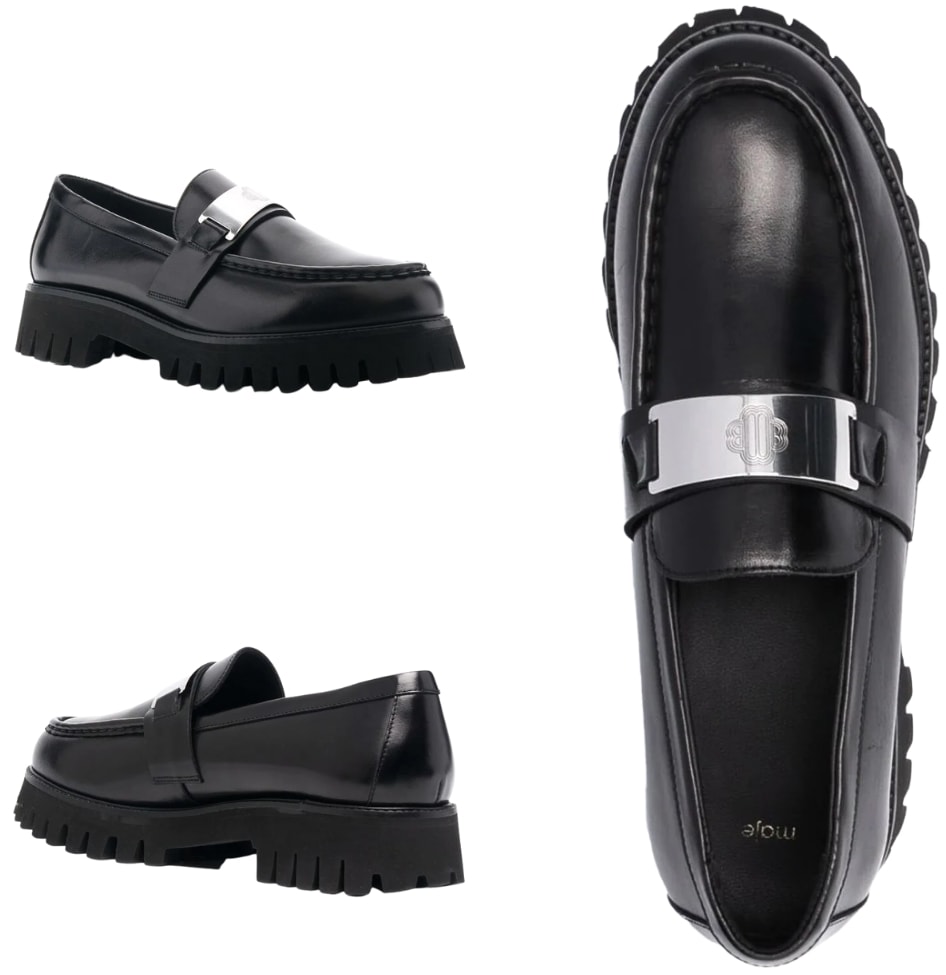 Maje’s black leather loafers add height through a chunky platform lug sole, finished with silver hardware across the vamp
Unlike the high-heeled platforms elsewhere in this guide, this type of loafer distributes its height through the sole. That distinction makes it useful to separate platform height from heel height when comparing different shoes.
15. Bottega Veneta Flash: Sculptural Platform Clogs
The Bottega Veneta Flash takes the clog in a more exaggerated direction, using a substantial sole and sculpted heel instead of decorative hardware or straps.
The vivid orange finish makes the construction especially easy to see: a rounded slip-on upper flows into a deep platform, while the heel has a carved profile and pronounced tread beneath it.
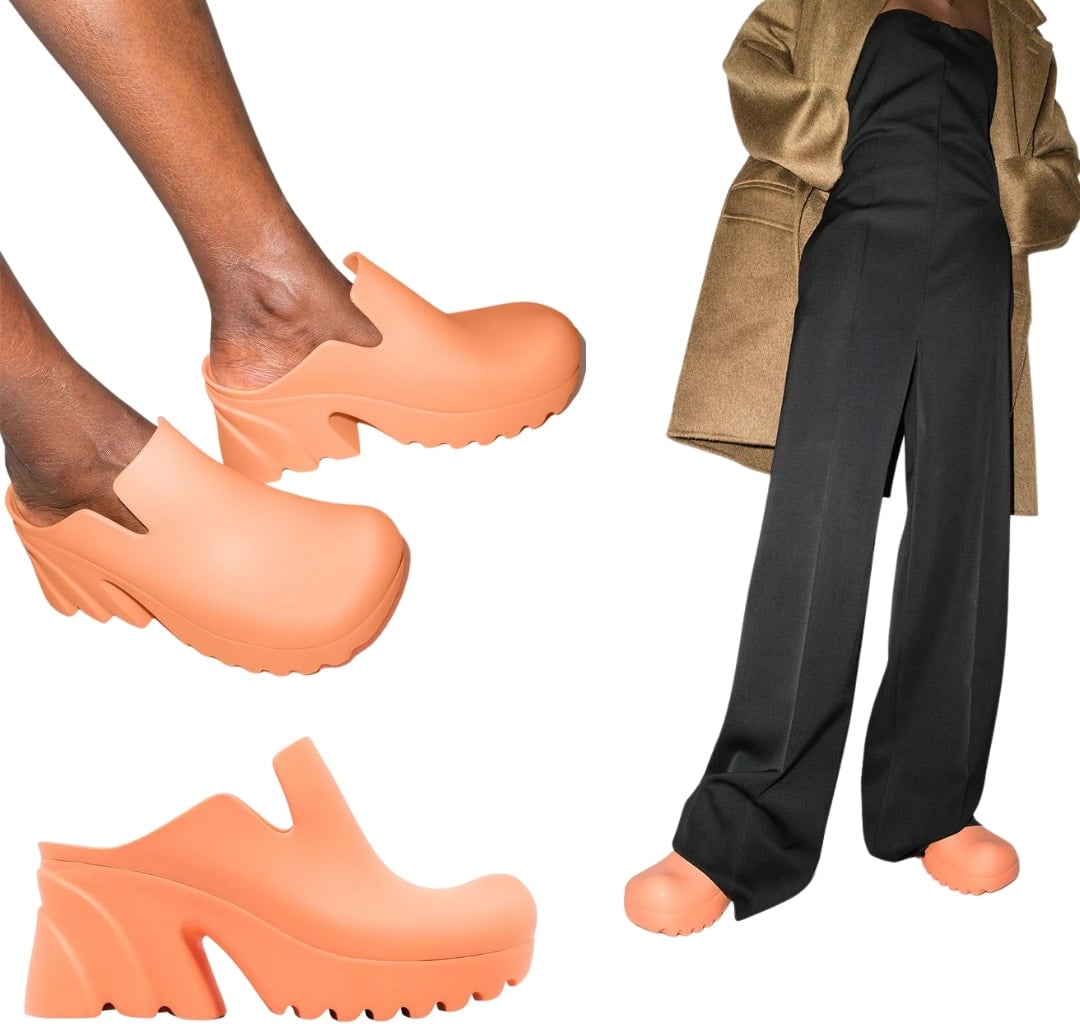 Bottega Veneta’s Flash clog combines an orange upper with a chunky platform and sculpted heel
16. Gucci GG Maxi: Monogram Platform Slides
Gucci’s GG Maxi shows that a platform does not need a separate high heel. The slide uses an exaggerated flat sole beneath a broad open-toe upper, adding height while keeping the basic slip-on sandal construction.
The beige canvas is covered with oversized GG monogram motifs, while the platform repeats the house’s smaller monogram pattern around its sides. The result combines a simple slide silhouette with a deliberately oversized sole.
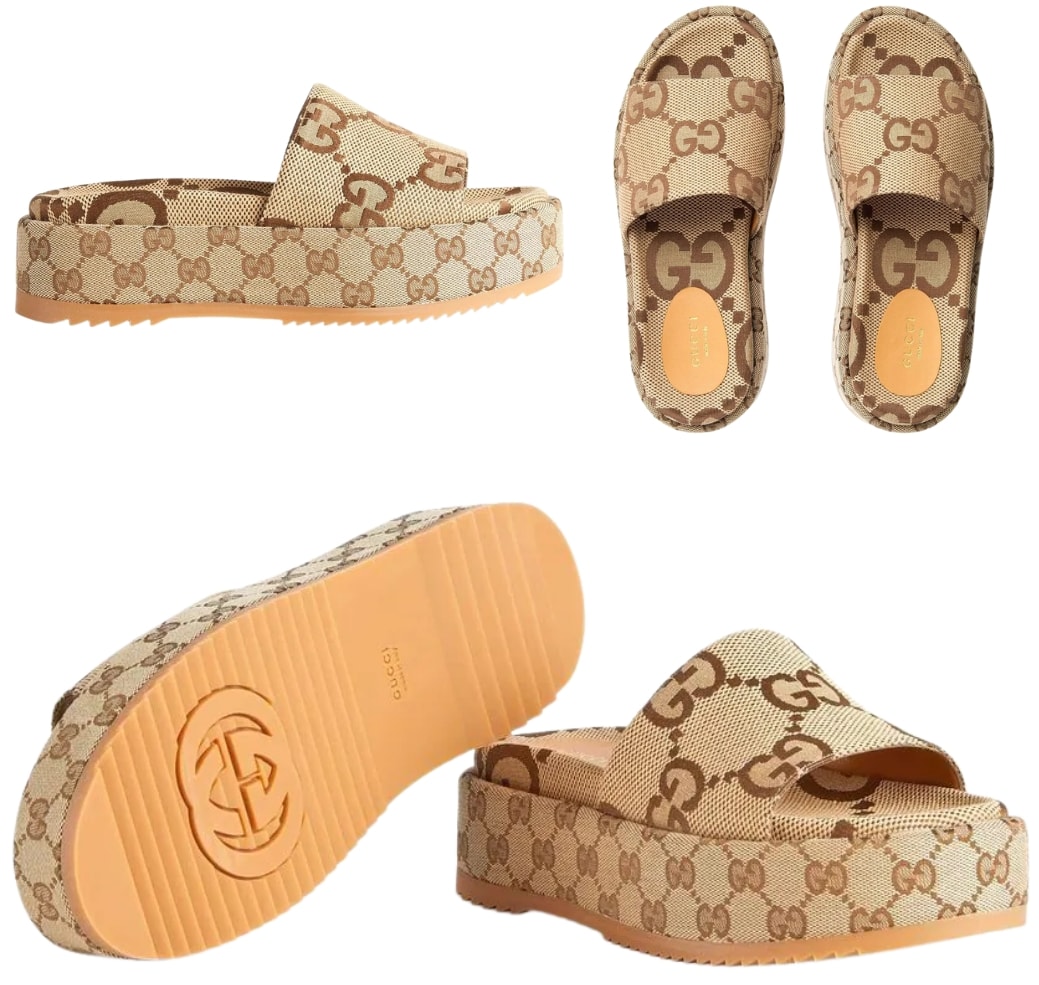 Gucci’s GG Maxi platform slides combine oversized GG monogram canvas with a thick open-toe sole
17. Saint Laurent Tribute: An Enduring Designer Platform
The Saint Laurent Tribute is one of the most recognizable designer interpretations of the platform sandal. Its defining features include an interwoven front, T-strap construction, a raised forefoot, an ankle strap, and a slim high heel.
The design also illustrates why overall heel height tells only part of the story with platforms. Raising the forefoot changes the effective heel-to-toe drop, even when the shoe retains the dramatic appearance of a very high heel.
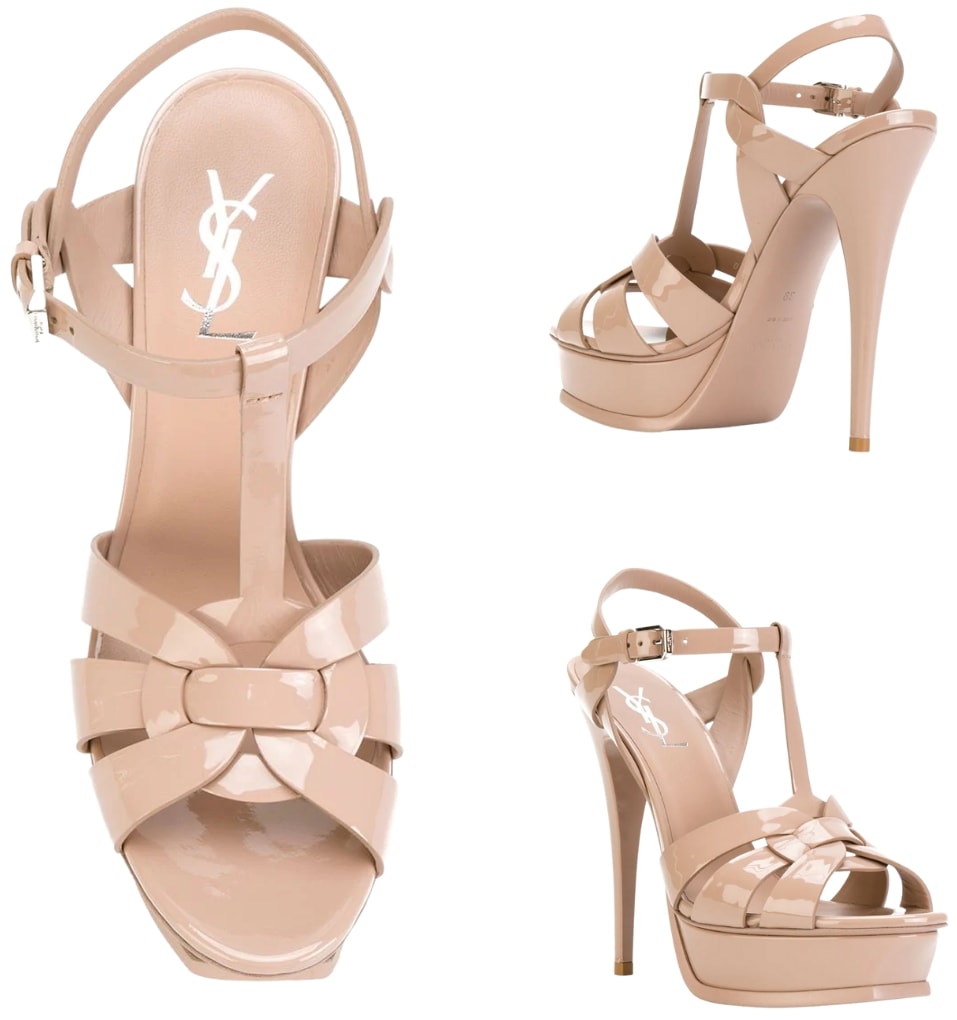 Saint Laurent’s Tribute platform sandal is recognizable by its interwoven T-strap, raised forefoot, and slim stiletto heel
How to Choose Platform Shoes: Height, Pitch, Stability, and Fit
These 17 examples show how broadly the term “platform” can apply. A platform can sit beneath a stiletto sandal, Mary Jane pump, loafer, clog, mule, or flat slide, and two shoes with similar overall heights can feel very different underfoot.
When comparing platform shoes, look beyond the total heel measurement. Consider the height beneath the forefoot, the resulting heel-to-toe drop, the heel’s width and shape, the sole’s rigidity, the shoe’s weight, and whether straps or a closed upper provide enough support for your foot.
From understated loafers and clogs to towering evening sandals, the platform is less a single shoe style than a construction technique designers keep reinterpreting. Understanding that construction makes it easier to judge both the proportions you like and the type of platform that works for how you intend to wear it.
Why Celebrities Wear Platform Shoes on the Red Carpet
Platform shoes solve a particular styling problem especially well: they create dramatic height without requiring the entire rise to come from the heel. By lifting the forefoot along with the heel, a platform can reduce the effective heel-to-toe drop compared with a non-platform shoe of the same overall height. Comfort still depends on fit, construction, heel shape, weight, and stability, but that combination of height and proportion helps explain why platforms appear so often on red carpets and press tours.
Celebrities also use platforms to balance clothes with substantial volume. A towering platform can hold its own beneath a sweeping gown, wide-leg trousers, or an oversized silhouette, while chunky platforms can deliberately become the focal point of a shorter look. Metallic finishes offer another option, adding height and shine without requiring an elaborate top.
That versatility is what keeps the platform relevant. A concealed platform pump can disappear beneath a gown, a strappy sandal can extend the line of an evening look, and a chunky loafer, clog, or Oxford can become the statement itself. These celebrity looks show just how differently the same basic construction can work:
👠 See How Celebrities Wear Platform Shoes:
- 👖 See how Heidi Klum styled Saint Laurent Candy platforms with cropped denim, using the substantial block heel to give an otherwise relaxed off-duty outfit a stronger finish.
- 💎 Compare Shay Mitchell and Diane Kruger in the same Giuseppe Zanotti crystal-buckle platforms, worn in black with Roberto Cavalli and in vivid red with Chanel Couture.
- ✨ Discover why Kylie Minogue repeatedly returned to her silver Dolce Gabbana platform sandals, pairing their mirrored finish with equally luminous red-carpet gowns.
- 🎬 See Selena Gomez take Jimmy Choo’s Misty platforms from a Cannes premiere to an evening gala, wearing the same minimalist silver sandals with two different Louis Vuitton looks.
- 🌟 Revisit Miley Cyrus’s towering Saint Laurent Paige platforms at the 2019 Met Gala, where the exaggerated block heels echoed the proportions of her Saint Laurent mini dress.
- 🖤 Compare Jessica Alba and Kelly Osbourne’s contrasting takes on Casadei’s sculptural platforms, from flared-denim daytime dressing to full red-carpet glamour.
- 👠 Look back at Jennifer Hudson and Britney Spears in Yves Saint Laurent Tribtoo platform pumps, one of the defining hidden-platform silhouettes of early-2010s celebrity style.
- 💚 See Brie Larson pair Gucci Angel platform pumps with an ethereal Gucci gown, showing how an extreme platform can become an intentional part of a formal silhouette rather than simply disappearing beneath the hem.