
Why do Christian Louboutin shoes have red soles? The glossy red outsole is the French designer’s signature — a design idea that began in 1993 when Christian Louboutin used red nail polish to transform the sole of a prototype shoe.
What started as an impulsive studio experiment became one of luxury footwear’s most recognizable visual signatures. The contrasting red sole helped make Christian Louboutin shoes identifiable from across a room, on the red carpet, and even in motion, eventually inspiring the popular nickname “red bottoms.”
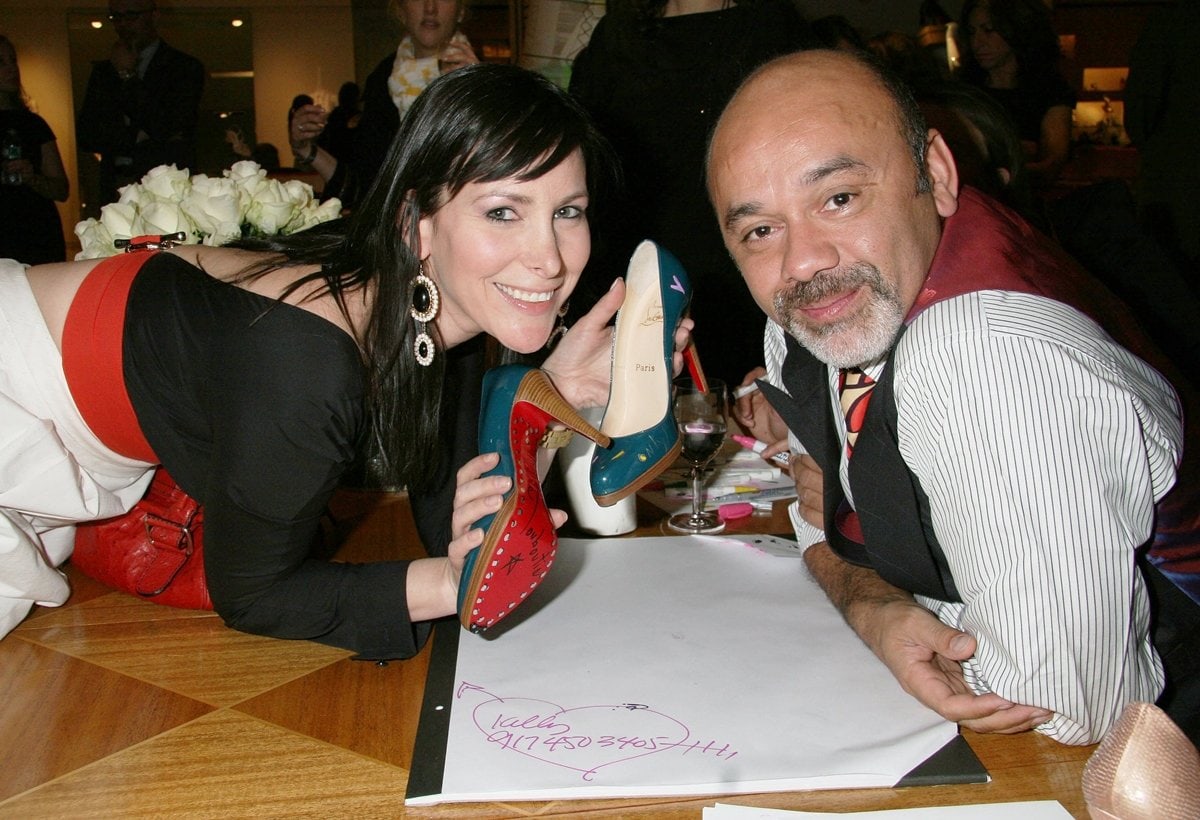 Christian Louboutin’s red sole takes center stage as a fan holds up one of his signed heels at Barneys New York in New York City on May 1, 2008 (Credit: Michael Carpenter / WENN)
The story involves Andy Warhol, an assistant painting her nails, a bottle of red polish, and a designer who realized that changing the bottom of a shoe could transform its entire appearance. Here’s how Louboutin’s red soles originated, what color they are, why the company fought to protect them, and how “red bottoms” became part of pop culture.
Why Are Christian Louboutin Soles Red?
Christian Louboutin’s soles are red because the designer felt that a prototype shoe he was developing needed more energy. The dark sole underneath the shoe visually weighed down the design, so Louboutin experimented with replacing it with a vivid red finish.
The solution was remarkably simple: he painted the sole red.
That contrast changed the appearance of the entire shoe. Instead of treating the outsole as an invisible functional component, Louboutin turned it into part of the design — one that could be glimpsed whenever the wearer walked, crossed her legs, or lifted her foot.
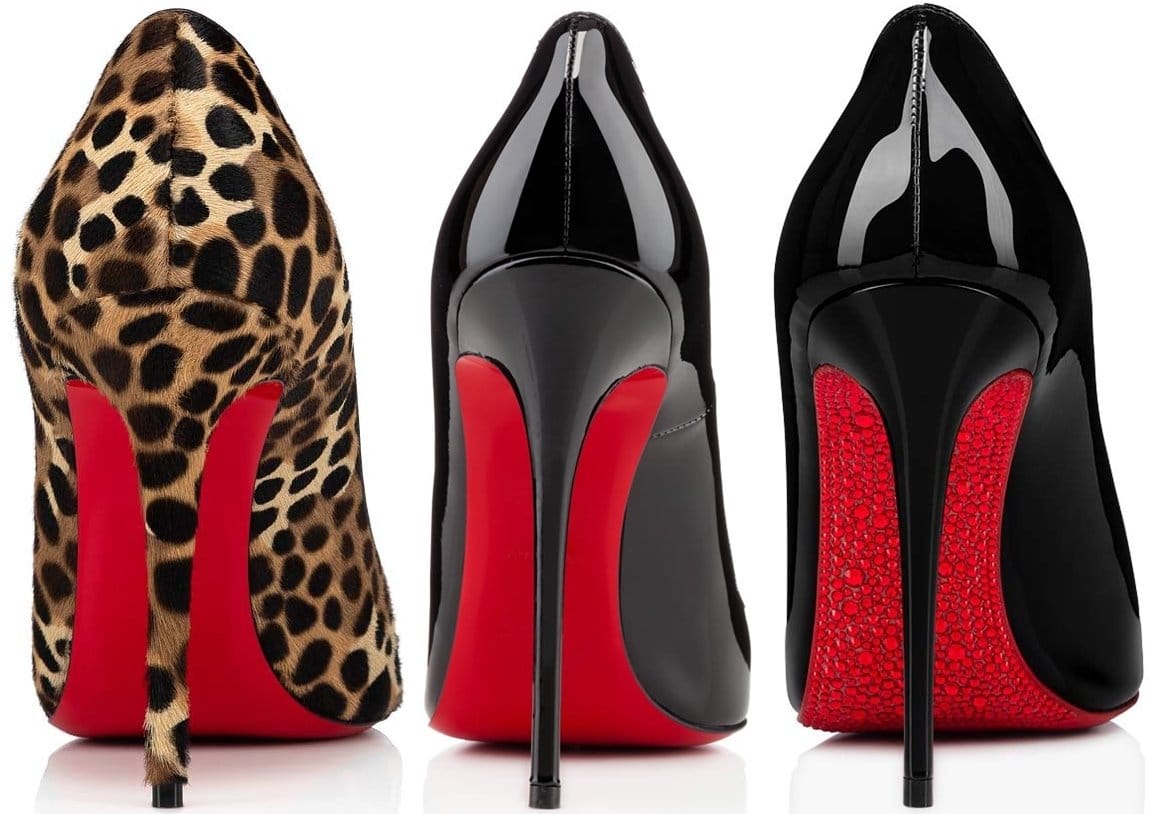 Leopard-print and black Christian Louboutin pumps show how the same vivid red outsole creates a recognizable signature across dramatically different shoe designs
How Red Nail Polish Inspired Christian Louboutin’s Red Soles
The red-bottom story dates to 1993, two years after Christian Louboutin established his namesake company.
Louboutin had been working on a shoe inspired by Andy Warhol’s colorful “Flowers.” Although he liked the prototype, something about the finished shoe did not capture the vibrancy of his original drawing.
Then he noticed an assistant nearby painting her fingernails red.
“There was this big black sole, and then, thank God, there was this girl painting her nails at the time,” Louboutin recalled.
He took the nail polish and painted the prototype’s dark outsole red. The bright contrast immediately gave the shoe the visual energy he had been looking for.
That spontaneous experiment became a recurring feature of his footwear and eventually the defining visual signature of the Christian Louboutin brand.
The idea also fitted naturally into Louboutin’s broader fascination with dramatic footwear. As a teenager, he sketched shoes rather than focusing on traditional academics, and he later built his career in Paris’s fashion and footwear world before launching Christian Louboutin in 1991.
 Christian Louboutin built his namesake Paris label around theatrical footwear, but a spontaneous experiment with red nail polish would create its most enduring visual signature (Credit: Michael Carpenter / WENN)
For the designer’s broader story — including his career, celebrity following, signature shoe silhouettes, quotes, and design philosophy — see our complete guide to Christian Louboutin shoes.
What Color Are Christian Louboutin Red Soles?
Christian Louboutin’s signature outsole is associated with a vivid shade commonly described as “Chinese red.” The color cited for the famous lacquered sole is Pantone 18-1663 TPX.
The design’s effectiveness comes partly from contrast. On a black, nude, white, metallic, or embellished shoe, the saturated outsole creates an unexpected flash of color underneath the foot.
That placement is important. Rather than covering the entire shoe in a recognizable brand color, Louboutin positioned his signature on a surface that repeatedly appears and disappears as the wearer moves.
The designer has repeatedly connected red with attraction, energy, and seduction. One of his most widely repeated comments about the signature color is: “Men are like bulls. They cannot resist the red sole.”
How “Red Bottoms” Became a Pop-Culture Status Symbol
Christian Louboutin’s red soles eventually became recognizable far beyond luxury-shoe shoppers. Celebrity wardrobes, red-carpet photographs, television, film, and music helped transform the outsole into shorthand for expensive designer footwear.
The informal phrase “red bottoms” became particularly recognizable in popular culture.
One of its most famous appearances came in Cardi B’s breakout hit “Bodak Yellow,” where the rapper calls her expensive Louboutin shoes “red bottoms” and “bloody shoes.”
 Cardi B helped turn “red bottoms” into a widely understood pop-culture reference after name-checking the luxury shoes in her breakout hit “Bodak Yellow” (Credit: WENN / Avalon)
Ariana Grande also referenced red bottoms in “7 Rings,” using the shoes as shorthand for conspicuous luxury while singing about buying expensive things for herself and her friends.
 Ariana Grande added another major pop reference to Louboutin’s signature footwear when she invoked “red bottoms” as a symbol of luxury in “7 Rings” (Credit: WENN / Avalon)
Those musical references mattered because listeners didn’t necessarily need the Christian Louboutin name spelled out to understand what “red bottoms” meant. The color and placement of the sole had become recognizable enough to function as a cultural reference.
Decades of celebrity wear reinforced that recognition. Louboutin shoes became fixtures on red carpets and in celebrity wardrobes, letting the flash of red underfoot work almost like a logo without conventional branding across the upper.
Can Christian Louboutin Trademark a Red Sole?
Once the red outsole became strongly associated with Christian Louboutin, it became more than an aesthetic flourish. It also became an important part of the brand’s identity.
That raised a difficult fashion-law question: under what circumstances can a designer claim trademark protection over a color used on a shoe?
The issue became particularly prominent in Christian Louboutin’s legal dispute with Yves Saint Laurent.
 Christian Louboutin’s efforts to protect the contrasting red outsole associated with his shoes helped produce one of fashion’s most closely watched trademark disputes (Credit: MEGA / WENN)
Louboutin’s company pursued trademark litigation after Yves Saint Laurent offered monochromatic shoes, including red shoes with red soles. The dispute forced courts to consider when a color could serve as a source-identifying trademark in fashion.
The resulting U.S. litigation produced an important distinction: Louboutin’s trademark protection applied to the contrasting red outsole when the remainder of the shoe was a different color, rather than giving the company an unrestricted monopoly over every red sole used on footwear.
That distinction is central to understanding the case. A red shoe with a matching red sole presents a different trademark question from, for example, a black pump with a contrasting lacquered-red outsole.
 Christian Louboutin makes red part of his own look in a glossy crimson suit — the color most closely associated with the signature soles of his footwear house (Credit: MEGA / WENN)
The dispute became notable well beyond intellectual-property law because it involved one of fashion’s most recognizable visual signatures.
Intellectual-property attorney Harley Lewin, who represented Louboutin in the YSL case, told The Fashion Law that the dispute attracted attention beyond lawyers and business executives because consumers were already so familiar with the red sole.
Louboutin has pursued protection for the red sole in multiple jurisdictions, although trademark rules and legal outcomes can differ between countries.
Why Christian Louboutin’s Red Soles Became So Recognizable
The success of the red sole comes from an unusually simple idea: put the identifying feature somewhere unexpected.
Most fashion branding relies on a logo, monogram, recognizable hardware, or repeated pattern. Louboutin took a different approach: as one of the world’s most recognizable shoe brands, the house turned the underside of a shoe into its defining visual signature.
That gives the signature a theatrical quality. A red sole may be largely hidden while its wearer is standing still, then suddenly become visible while walking, climbing stairs, sitting, or posing for photographers.
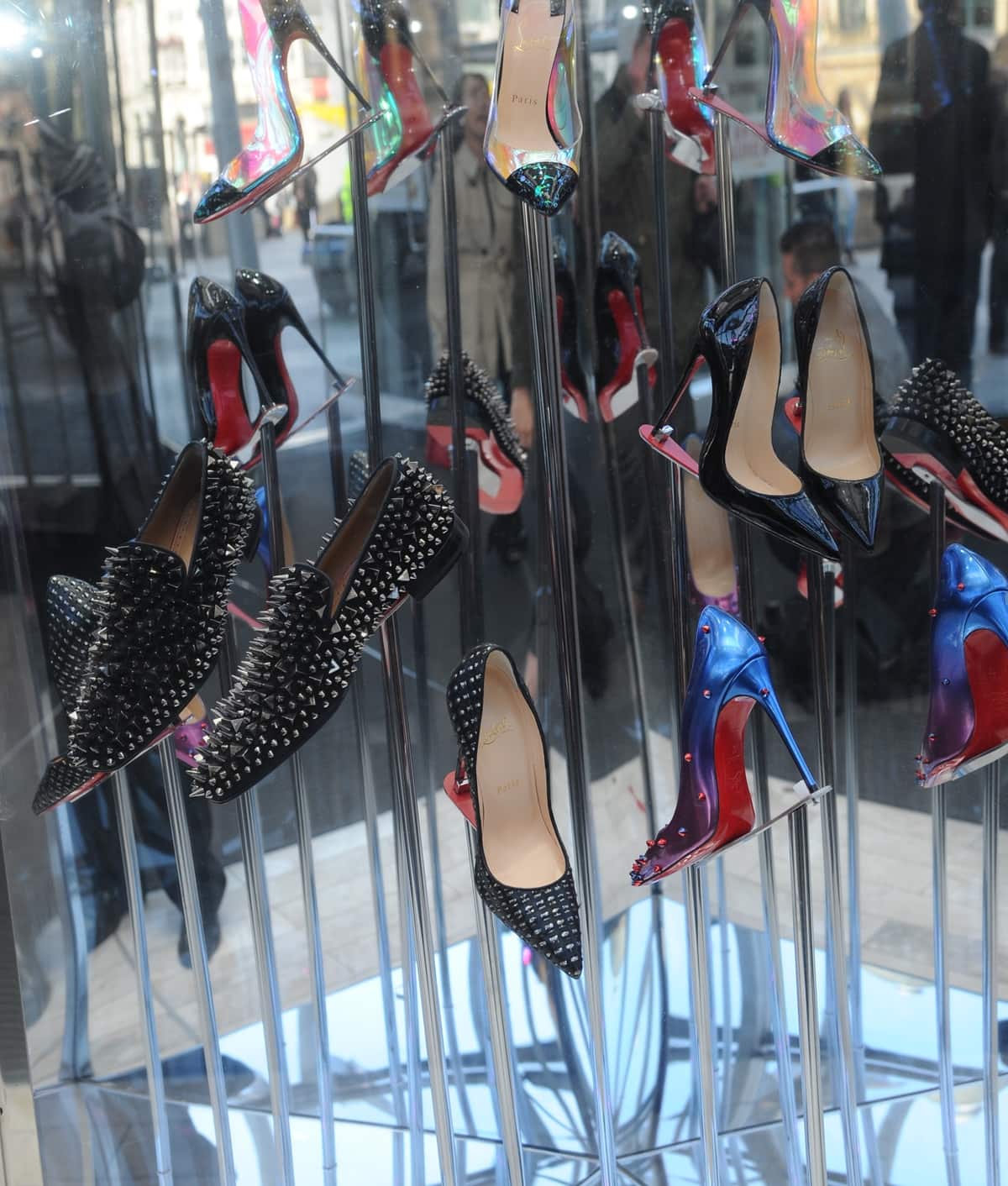 A Christian Louboutin boutique display shows how the red sole unifies wildly different designs, from classic black pumps and spiked loafers to iridescent statement heels (Credit: WENN)
It also works across very different shoe designs. A pointed pump, platform sandal, ankle boot, or embellished evening shoe can look completely different from another Louboutin design while retaining the same recognizable flash of red underneath.
That consistency turned a design detail into a visual identifier—and eventually into the phrase “red bottoms” itself.
One Red Sole, Many Silhouettes: How Louboutin Reinvented the Signature
The red outsole may be the constant, but the shoes above it have never followed a single formula. Christian Louboutin has carried the signature across razor-sharp pumps, transparent PVC sandals, crystal-covered heels, sculptural platforms, and spike-studded designs — allowing the flash of red to remain recognizable even as the silhouette changes completely.
That contrast is what gives the red sole its staying power: it connects radically different shoes without requiring them to look alike. Explore how those ideas translate into individual Louboutin designs and celebrity styling moments below.
👠 Explore Christian Louboutin’s Red-Carpet Shoe Legacy:
- ✨ See how Christian Louboutin’s crystal-covered Chiara pumps sparkle on the red carpet — Hikari Mori and Joey King show two very different ways to wear the pointed-toe, crystal-trimmed evening heel.
- 💎 Revisit the celebrity era of Louboutin’s barely-there Jonatina sandals — Carey Mulligan, Danai Gurira, Yara Shahidi, Brie Larson, and more demonstrate why the transparent PVC design became a late-2010s red-carpet favorite.
- 💠 The sheer Neoalto pump gives the classic Louboutin stiletto a lace-and-mesh twist — Heidi Klum, Hailee Steinfeld, and Jennifer Lopez showcase the red-bottom heel’s more delicate side.
- 🔮 The Optichoc turns transparency into part of the shoe’s architecture — pointed toes, PVC side panels, and the signature red sole capture Louboutin’s late-2010s illusion-shoe era.
- ⚡ Zoey Deutch shows how the Optisexy reworked the classic pump with asymmetric PVC — a sharp red-carpet example of Louboutin using transparency to visually extend the foot.
- 🌈 Fearne Cotton and Naomie Harris take the Discodeporte sandal in opposite directions — iridescent metallics, python texture, and sculptural cutouts reveal Louboutin’s more experimental side in evening shoes.
For a broader look at the house staples, our guide to Christian Louboutin’s most iconic shoes traces designs including the Pigalle, Kate and So Kate, Iriza, Follies Strass, Jonatina, and Bianca.
The same recognition that made the red sole famous also made Louboutin a frequent target for counterfeiting. Before buying a pre-owned pair, see our Christian Louboutin authentication guide for details on the red sole, stitching, logos, construction, and packaging.